
Requesting Forgiveness
Why would requesting forgiveness be so important?
First, requesting forgiveness indicates to the offended person that you want to see the relationship fully restored. When an offense occurs, immediately it creates an emotional barrier between two people. Until that barrier is removed, the relationship cannot go forward. An apology is an attempt to remove the barrier. If you discover that the person’s primary apology language is requesting forgiveness, then this is the surest way to remove the barrier. To that person, this is what indicates that you genuinely want to see the relationship restored.
Second, requesting forgiveness is important because it shows that you realize you have done something wrong – that you offended the other person, intentionally or unintentionally. What you said or did may not have been morally wrong. You may even have done or said it in jest. But it offended the other person. He or she now holds it against you. It is an offense that has created a rift between the two of you. In that sense it is wrong, and requesting forgiveness is in order.
Third, requesting forgiveness shows that you are willing to put the future of the relationship in the hands of the offended person. You have admitted your wrong; you have expressed regret; you may have offered to make amends. But now you are saying “Will you forgive me?” You know that you cannot answer that question for that person. It is a choice that he or she must make – to forgive or not forgive.
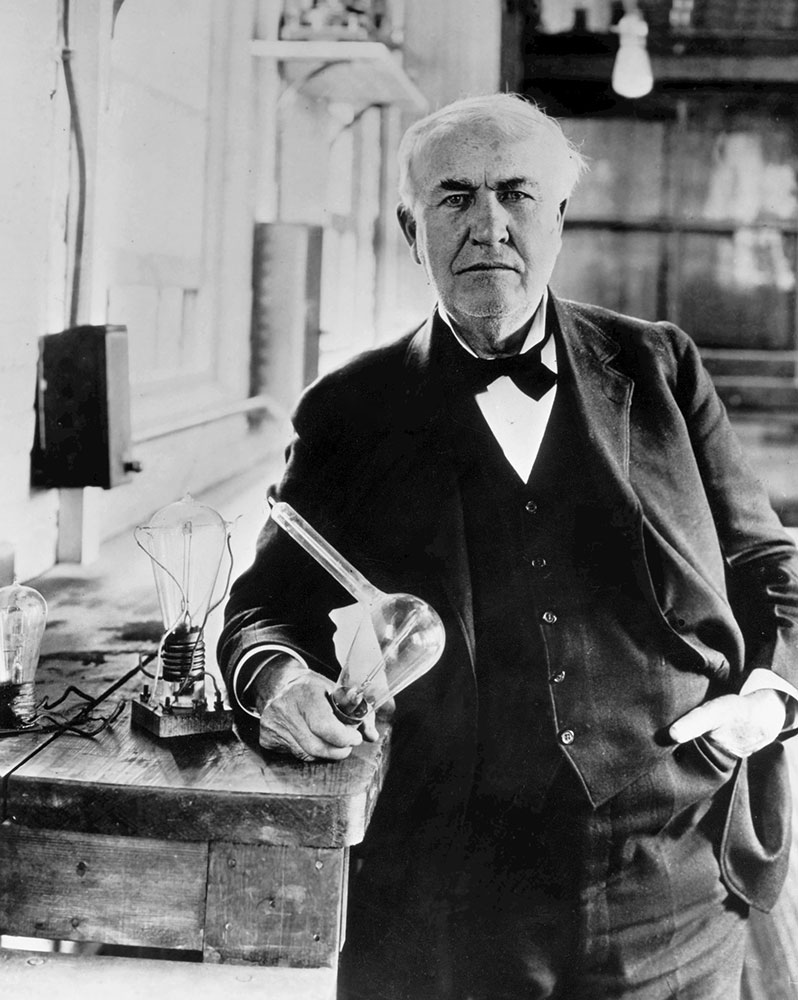
Thomas Edison
“I have friends in overalls whose friendship I would not swap for the favor of the kings of the world”
Forgiveness
When Edison and his staff were developing the incandescent light bulb, it took twenty-four hours to manufacture a single bulb. One day he handed a new bulb to a young errand boy and asked him to take it upstairs to the testing room.
As the boy turned and started up the stairs, he stumbled and fell, and the bulb shattered on the steps. Instead of rebuking the boy, Edison reassured him and then turned to his staff and told them to start working on another bulb.
When it was completed a day later, Edison demonstrated the reality of his forgiveness in the most powerful way possible. He walked over to the same boy, handed him the bulb, and said, “Take this up to the testing room.”
Imagine how that boy must have felt.
He knew that he didn’t deserve to be trusted with this responsibility again. Yet, here it was, being offered to him as though nothing had ever happened. Nothing could have restored this boy to the team more quickly, more convincingly, or more fully.
There is wisdom in the counsel that we should: “Bear with each other and forgive one another if any of you has a grievance against someone” (Colossians 3:13) and in the Golden Rule: “That we should do to others as we would want them to do to us.”
So the next time you have the opportunity to forgive someone who is genuinely sorry for their mistake, look them in the eye and with genuine respect and concern tell them, “I forgive you.”
And then back up your words with actions.