
When Love Fades… Real Love Can Begin
Once the experience of falling in love has run its natural course. (remember, the average in-love experience only lasts two years) we will return to the world of reality and begin to assert ourselves. He will express his desires, but his desires will be different from hers. He wants sex, she is too tired. He dreams of buying a new car, but she says, “we can’t afford it.” She would like to visit her parents, but he says, “I don’t like spending so much time with your family.” Little by little, the illusion of intimacy evaporates, and the individual desires, emotions, thoughts, and behavior patterns assert themselves. They are two individuals.
The “in love” experience temporarily meets that need, but it is inevitably a quick fix and has a limited and predictable life span. After we come down from the high of the “in love” obsession, the emotional need for love resurfaces because it is fundamental to our nature.
Some couples believe that the end of the in-love experience means they have only two options: resign themselves to a life of misery with their spouse or jump ship and try again.
Research seems to indicate that there is a third and better alternative: We can recognize the in-love experience for what it was – a temporary emotional high – and now pursue “real love” with our spouse. That kind of love is emotional in nature but not obsessional. It is a love that unites reason and emotion. It involves an act of the will and requires discipline, and it recognizes the need for personal growth.

Samuel Langley’s AeroDrome
ALMOST the World’s First AirplaneThe Effort
That kind of love requires effort and discipline. It is the choice to expend energy in an effort to benefit the other person, knowing that if his or her life is enriched by your effort, you too will find a sense of satisfaction – the satisfaction of having genuinely loved another. It does not require the euphoria of the in-love experience. In fact, true love cannot begin until the in-love experience has run its course.
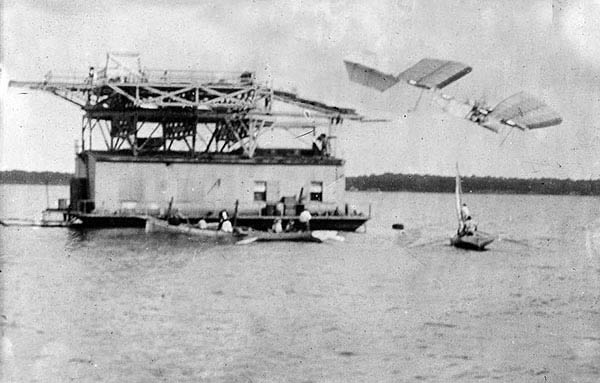
Samuel Langley’s Flight Test, Potomac River
Back in the day, if you were looking to wager some serious money on who would invent the first airplane, you would have been a fool not to bet on Samuel Langley and this airplane. Langley was the head of the Smithsonian institution, had the personal backing of the US President and a grant from the US government worth over one million dollars. He did build an airplane and after his second test flight failed, HE JUST QUIT!
11 Years later, in 1914, Glenn Curtiss, the famous aviation pioneer, rebuilt the Langley Aerodrome A and conducted further flight tests. With modifications and improvements, Glenn Curtiss was able to get the Aerodrome A to fly. Today, Samuel Langley is little more than a footnote in the history books.
Had he reached out, sought more help from others and NOT QUIT who knows how he would be remembered today?