
Ideas for Family Traditions
We all have to eat. The way to the heart, mind, and soul is often through the stomach. It takes careful thought and determination, but it’s possible to organize meaningful mealtimes – times without electronic devices, television, without just gulping something down on the run. And it doesn’t have to take forever, either, particularly if everyone does some part in the preparation and in the cleanup.
Relaxation and fun are part of a great family life! There are few renewing forces in a family more powerful than a family vacation. Planning for it, anticipating it, and thinking about it – as well as discussing what happened on past vacations are enormously renewing for a family.
Probably more than almost anything else, people remember and love family traditions around important holidays. They often come together from long distances and long separations. There’s food. There’s fun. There’s laughter. There’s sharing. And often there’s a unifying theme or purpose.
Holidays provide an ideal time to build traditions. They happen every year. It’s easy to create a sense of anticipation and fun as well as meaning and camaraderie around them.
A great way to learn together is to share in a family member’s particular hobby or interest. Get involved in it. Learn about it. Read books. Join associations. Subscribe to magazines. Soak it up. Make it a focus. Talk about it together.
Learning together is socially and mentally renewing. It gives you a shared interest, something fun to talk about. There’s joy in discovering and learning together. It can also be physically renewing when you learn a new sport or a new physical skill.
Learning together can be a wonderful tradition and one of the greatest joys of family life!

It was Christmas Eve 1968, and the crew of Apollo 8 was orbiting the moon. They did a live broadcast from their spaceship, garnering the largest TV audience ever at the time. The astronaut crew introduced themselves and described what it was like to see the moon so close.
Then one of the astronauts said, “We are now approaching lunar sunrise, and for all the people back on Earth, the crew of Apollo 8 has a message that we would like to send to you.”
The three astronauts then took turns reading the first 10 verses of the first chapter of Genesis, which describes the creation of the world. They read it from the King James Version of the Bible.
When they finished, the last astronaut concluded, “and from the crew of Apollo 8, we close with good night, good luck, a Merry Christmas – and God bless all of you, all of you on the good Earth.”
George Gallop reports that 95 percent of Americans believe in some form of supreme being or higher power, and that more than ever before, people are feeling the need to reach to find spiritual help. Research also clearly shows that worshipping together is one of the major characteristics of healthy, happy families. It can create context, unity, and shared understanding.
In addition, studies have shown that religious involvement is a significant factor in mental and emotional health and stability, particularity when individuals are internally motivated.
When they are extrinsically motivated – by public approval or conformity, for example – the religious context is not always benevolent. In fact, it sometimes nurtures a culture that is extremely strict and sets unrealistically high expectations, causing people who are emotionally vulnerable can experience even more emotional problems.
But when the environment is focused on growth based on moral principles rather than on an outward perfectionism that reinforces rule-bound rigidity, people experience greater health. The culture allows for honest recognition of moral imperfections and acceptance of self, even as it encourages acceptance of and living in harmony with the principles that govern all of life.
It used to be that families had to work together in order to survive, so work was something that kept families close. In today’s society “work” often pulls families apart. You have parents going “off to work” in different directions – all of them away from home. You have children who don’t really need to work economically and are growing up in a social environment that views work as a curse rather than as a blessing.
So creating the tradition of working together is really a matter of shaping positive, healthy views of work that will last a lifetime. Having a family garden, doing household chores together on a Saturday, volunteering – there are many ways to do it and many benefits of doing it.
Probably the most important dimension of all these traditions is having fun together – genuinely enjoying one another, enjoying the home environment, making home and family the happiest, biggest “warm fuzzy” in people’s lives. Having fun together is so vital and so important that it could even be listed as a tradition in and of itself.
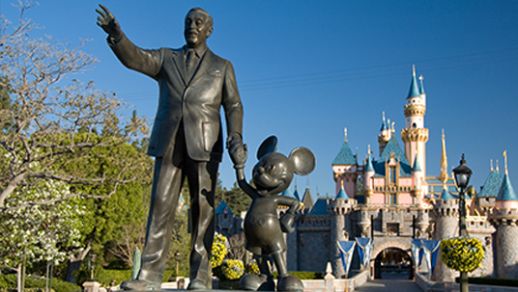
Walt Disney’s Vision
One of the great dreamers of the twentieth century was Walt Disney.
Back when Disney’s two daughters were young, he used to take them to an amusement park in the Los Angeles area on Saturday mornings.
Disney was especially captivated by the carousel. As he approached it, he saw a blur of bright images racing around to the tune of energetic music. But when he got closer and the carousel stopped, he could see that his eyes had been fooled. He saw shabby horses with cracked and chipped paint. And he noticed that only the horses on the outside row moved up and down. The others stood lifeless, bolted to the floor.
The cartoonist’s disappointment inspired him with a grand vision.
His vision that day became Disneyland.
What is your vision? What is your vision for your life? For your family? For your marriage? For your kids? There is a saying that, “Where this is no vision the people perish?” (Proverbs 29:18)
Are you willing to seize your vision, to sacrifice for it, to not let anything get in your way from it?